Your 2015 Salary Looks Bigger Than It Actually Was
You earned $60,000 in 2015 and you earn $68,000 now, so it feels like a raise. Whether it actually is depends on inflation, because the same dollars buy less today, and the number on your paycheck hides that erosion completely.
Nominal Pay Is the Number; Real Pay Is the Power
Nominal salary is the dollar figure printed on your offer letter or your pay stub. Real salary is what those dollars can actually buy after accounting for rising prices, and the two figures drift apart steadily over time.
If prices rise but your nominal salary stays flat, your real salary falls even though the number on the check never changed. You feel poorer at the grocery store while your pay stub insists nothing happened, and both observations are correct.
Comparing pay across different years means converting old dollars into today's purchasing power first. Without that step you are comparing two numbers that no longer mean the same thing, like measuring one distance in miles and another in kilometers.
How Cumulative Inflation Adds Up Year After Year
Inflation compounds, just like interest. A 3 percent rise one year sits on top of the prices that already rose the year before, so a decade of seemingly modest inflation can lift the overall price level by 30 percent or more. Try the inflation-adjusted value calculator to see your own numbers.
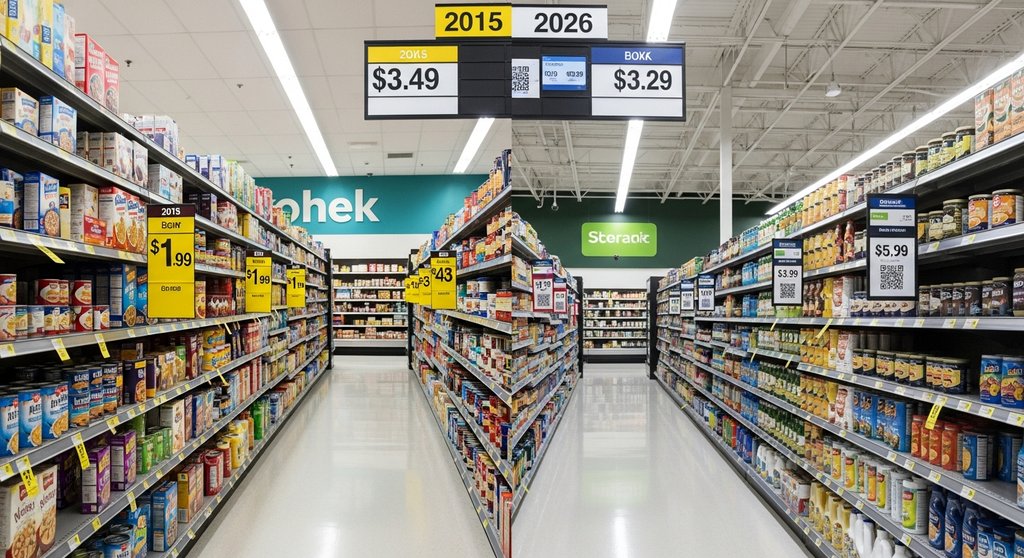
From 2015 to today, cumulative inflation in the United States has pushed prices up by roughly 35 percent. That means it takes about $1.35 now to buy what $1.00 bought in 2015, so any salary from that year must be scaled up before you can compare it fairly to today's pay.
Some years inflation ran near 2 percent and some years it spiked well above 6 percent. The exact path matters less than the cumulative effect, which is the total gap between old prices and current ones.
A Worked Example of a 2015 Salary in Today's Dollars
Take that $60,000 salary from 2015. Multiply it by 1.35 to express it in today's dollars, and you get about $81,000. In plain terms, you would need around $81,000 today to match the buying power that $60,000 had back in 2015.
Now compare your current $68,000. It is higher than $60,000 in nominal terms, so it looks like progress, but it falls well short of the $81,000 needed just to keep pace with prices. In real terms, your purchasing power has actually dropped by roughly $13,000.
Flip the comparison and the point holds. To break even with your 2015 self, your salary needed to climb 35 percent, from $60,000 to $81,000. Anything less means you can buy fewer goods and services than you could a decade ago.
Why This Matters for Raises and Job Offers
A raise below the inflation rate is a pay cut in disguise. If prices climb 4 percent in a year and your salary rises only 2 percent, you can buy less than you could the year before despite the bigger number on your paycheck.
The same logic applies to job offers and counteroffers. An employer who offers to match your old salary from several years ago is quietly offering you less, because those dollars have lost value since you last earned them.
When you weigh an old salary against a new offer, or judge whether your raises have truly kept up, convert everything into the same year's dollars before you compare. Only then are you measuring real value rather than numbers that have quietly changed meaning underneath you.
Where the Same Math Reshapes Your Money
The nominal-versus-real gap reaches well past salaries. A savings account paying 1 percent while prices rise 3 percent is losing 2 percent of its purchasing power every year, even though the balance ticks upward on the statement.
Long-term goals feel the effect most. A retirement target of $1 million sounds enormous today, but if it is 25 years away, inflation could cut its real buying power roughly in half, so the figure you actually need to aim for is far higher than the round number suggests.
Fixed payments work the same way in reverse. A 30-year mortgage payment of $1,800 stays flat in nominal dollars, which means it costs you less in real terms each year as your income and prices rise around it. Whenever a dollar amount stretches across time, translate it into a single year's purchasing power before you judge whether it is large or small.
Comparing prices across decades brings the idea home. A movie ticket that cost $8 in 2015 might run closer to $11 today, and a $25,000 car from then would carry a far higher sticker now. None of these things truly got more expensive in real terms; the dollars simply shrank. Adjusting for inflation is how you tell a genuine price change from the steady erosion happening to every dollar you hold.