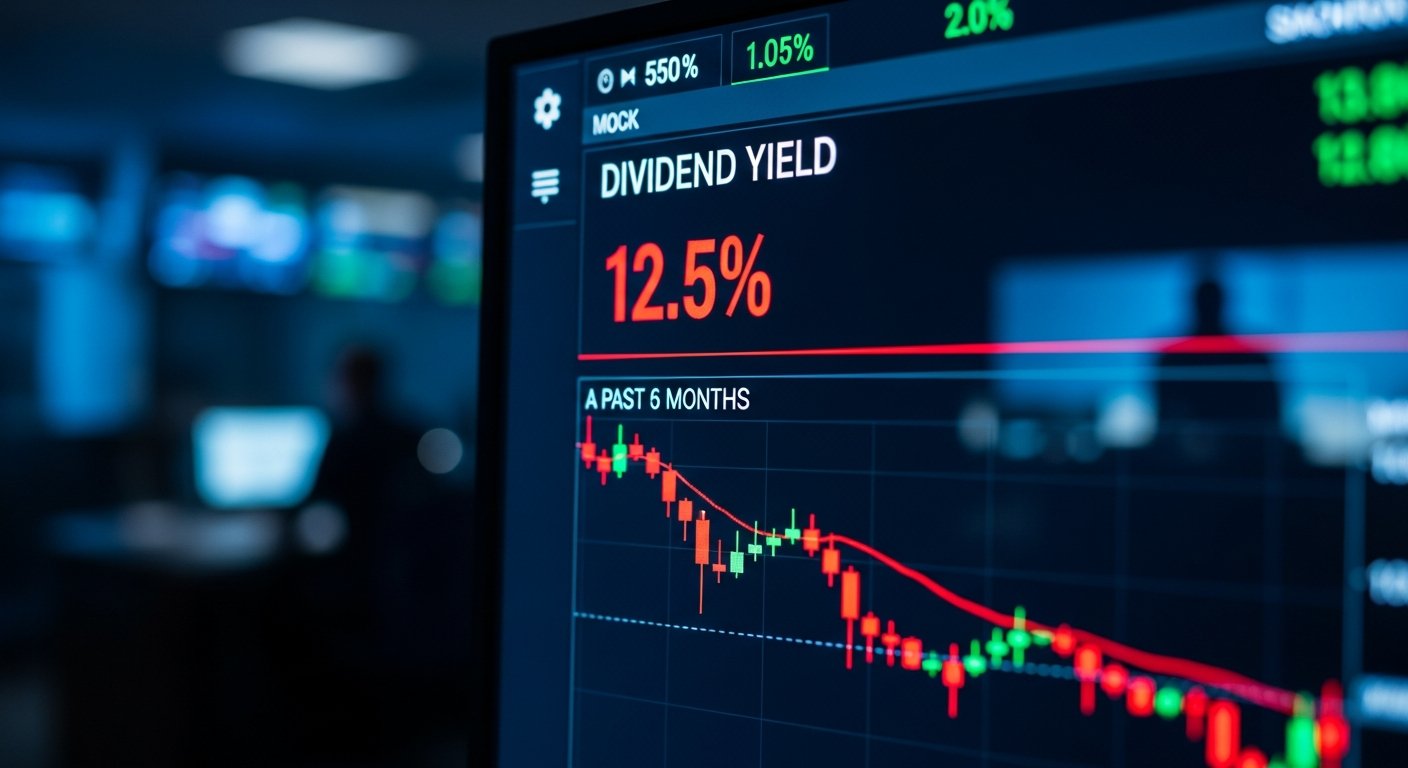
A High Dividend Yield Isn't Always a Good Sign
Income investors chase high dividend yields, and a fat number looks like free money. But yield is a fraction, and the part doing the work is sometimes a sinking share price rather than a generous company. A 12% yield can be a warning light, not a reward.
What the Yield Number Actually Measures
Dividend yield is the annual dividend per share divided by the current share price. A stock paying $2 a year at a $40 price yields 5% ($2 divided by $40). Buy 100 shares for $4,000 and you collect $200 a year in dividends, a return you can compare directly against a savings account or bond yield.
Because price sits in the denominator, yield moves whenever the price moves, even if the dividend never changes. That mechanical link is the source of most yield confusion among new investors.
It also matters which dividend a quote uses. Trailing yield looks at the past twelve months of payments, while forward yield projects the next twelve. A company that just cut its dividend can still show a fat trailing yield, flattering a stock whose income has already shrunk. Always confirm which figure you are reading.
Why a Falling Price Inflates the Yield
Take that same $2 dividend and watch the share price drop from $40 to $20 on bad news. The yield instantly doubles to 10% ($2 divided by $20), yet nothing improved. The company is paying the same cash; the market simply marked the stock down. Try the check a stock's income return with the dividend yield calculator to see your own numbers.
A yield that suddenly jumps into the double digits often reflects a price collapse, not management generosity. Screening only for the highest yields tends to surface troubled companies, the classic yield trap where the dividend gets cut soon after you buy.
The market is usually pricing in trouble it expects ahead, such as falling sales, a heavy debt load, or a business in decline. A 10% yield is the market's way of saying it doubts the payout will last. When a yield looks too good compared to peers paying 3% or 4%, the difference is rarely a gift.
The Payout Ratio Test for Sustainability
To judge whether a dividend can survive, check the payout ratio: dividends divided by earnings. A company earning $3 per share and paying $2 has a 67% payout ratio, leaving some cushion. A company earning $1.50 while paying $2 has a 133% ratio and is funding the dividend from reserves or debt.
Ratios above 80% to 100% deserve scrutiny, and anything over 100% is a flashing signal. When earnings cannot cover the payout, the dividend is borrowed time. Utilities and REITs run higher ratios by design, so always compare a company against its own industry.
Earnings can also be lumpy, so seasoned investors often check the payout against free cash flow instead of reported profit. Cash is harder to massage than accounting earnings, and a dividend covered comfortably by real cash generation is far more likely to survive a rough quarter intact.
A Worked Yield Trap Example
Suppose a retailer trades at $50 and pays a $3 dividend, a tidy 6% yield. Sales fall, the stock slides to $25, and the yield screen now shows a tempting 12%. An investor who buys 200 shares spends $5,000 expecting $600 a year.
But the retailer earns only $2 per share against its $3 payout, a 150% payout ratio. Three months later the board halves the dividend to $1.50. The investor's income drops to $300, and the share price often falls further on the cut, delivering a loss on both fronts.
A quick payout-ratio check before buying would have flagged the danger. A dividend that exceeds earnings is a promise the company cannot keep without borrowing or draining cash reserves. The 12% headline was not income waiting to be collected; it was a number about to be revised downward.
How to Read Yield Without Getting Burned
Treat a high yield as a question, not an answer. Pair it with the payout ratio, the trend in earnings, and the dividend's history of increases or cuts. A 3% to 5% yield backed by rising profits usually beats a 12% yield propped up by a stumbling business.
Steady dividend growers, companies that raise payouts year after year, tend to reward patient investors more reliably than the highest-yielding names on any given day. The yield gets you to the shortlist; the fundamentals tell you whether to trust it.
Diversification protects you when a single judgment goes wrong. Spreading income holdings across many companies and sectors means one dividend cut dents the portfolio rather than wrecking it. No yield figure, however attractive, justifies betting a large share of your savings on one stock's promise to keep paying.