Why Your Loan's Interest Rate and APR Are Not the Same
A lender quotes you 7.5% on a personal loan, but the APR is 11.2%, and most borrowers sign the paperwork without understanding why those two numbers are so far apart.
The gap between interest rate and APR is where hidden costs live
The interest rate tells you the cost of borrowing the principal, expressed annually. The APR, or annual percentage rate, folds in origination fees, broker fees, and certain closing costs, then spreads them across the life of the loan. That single number is the more honest picture of what the loan actually costs per year.
On a $20,000 personal loan over 48 months at a 7.5% stated rate, your monthly payment looks reasonable on paper. But if the lender charges a 3% origination fee ($600), your effective APR climbs to roughly 9.8%. Over four years, that difference in rate adds up to several hundred dollars in real cost that the advertised rate never hinted at.
What lenders are legally required to disclose, and what they aren't
Under the Truth in Lending Act, lenders must show the APR on any consumer loan offer. So the number is there. The problem is that most advertisements lead with the interest rate because it is always smaller, and smaller feels better. Try the loan APR calculator to see your own numbers.
Not every fee gets rolled into the APR calculation, either. Optional products like credit insurance, late fees, and prepayment penalties are typically excluded. A loan that looks competitive by APR can still carry expensive add-ons that a quick read of the disclosure box misses. Always check the total amount financed against the loan amount you actually receive.
Running the numbers before you sit across from a lender
The smartest move is to calculate your own APR before you walk into a negotiation. If a lender quotes a 6.9% rate with a $500 origination fee on a $15,000 auto loan over 60 months, you can plug those numbers into a loan APR calculator and see that the true annual cost is closer to 8.1%. That 1.2-point difference is leverage when you push back on fees.
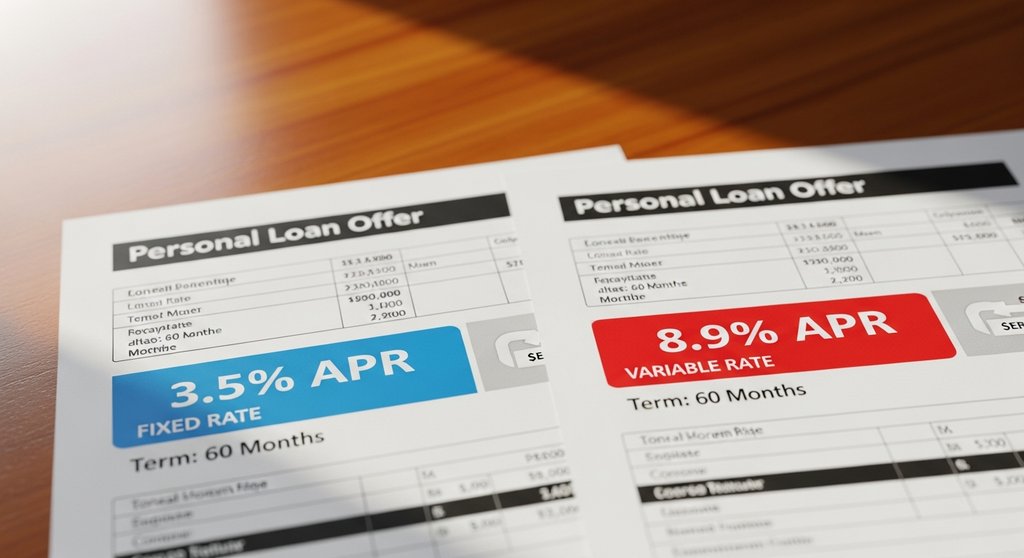
Comparing two loans by interest rate alone is like comparing two flights by departure time and ignoring the layovers. The APR is the layover. Run both offers through the same tool, use identical loan amounts and terms, and compare the APR and total interest paid side by side. The cheaper-looking loan often loses that contest.
When a higher APR is still the right choice
A short-term loan almost always carries a higher APR than a long-term one, even at the same stated rate, because fixed fees are amortized over fewer months. A 12-month personal loan at 8% with a $200 fee has a higher APR than a 60-month version of the same loan. That does not make the shorter loan worse; it may cost you far less in total interest paid.
APR is a comparison tool, not a verdict. A 14% APR on a 6-month bridge loan can be smarter than a 9% APR on a 5-year loan if you only need the money for a few months. Total interest paid over the actual period you hold the loan matters more than the annualized rate in isolation. Run the full scenario before deciding.