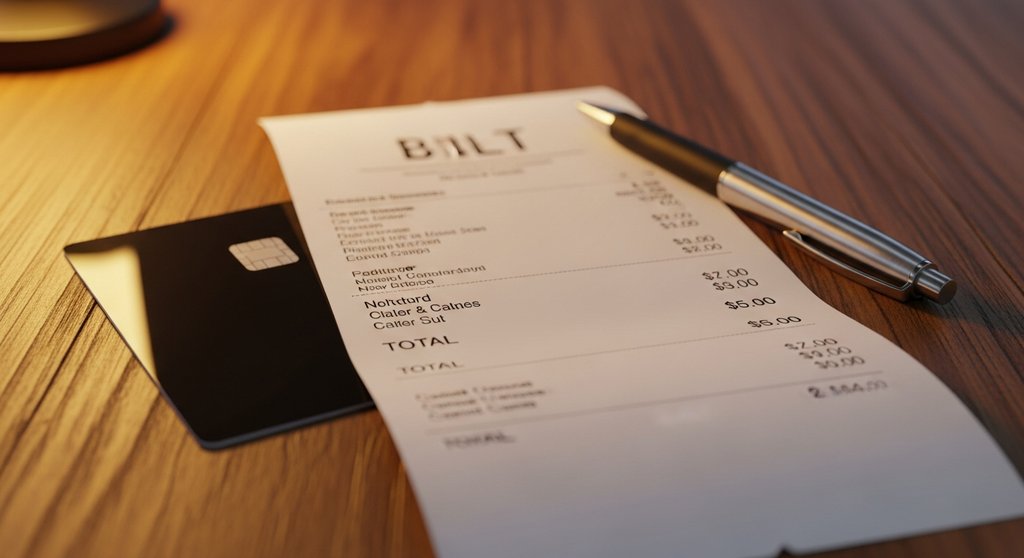
Should You Tip on the Pre-Tax or Post-Tax Total?
A single line on your restaurant bill quietly changes how much you pay, and most diners never notice it.
The Two Numbers on Every Restaurant Bill
Most restaurant bills show a subtotal before tax and a total after tax. If you eat at a spot in New York City, where the combined sales tax on food is about 8.875%, those two numbers differ by nearly 9%. On a $80 dinner that gap is $7.10, which means tipping 20% on the post-tax total adds an extra $1.42 compared to tipping on the pre-tax amount.
That sounds small for one meal, but a couple who dines out three times a week ends up paying roughly $220 extra per year just by defaulting to the taxed figure. The money isn't going to the server; it's padding a calculation that was already padded by the government.
What Etiquette Experts Actually Say
Emily Post's etiquette guidelines have historically pointed to the pre-tax subtotal as the correct base for tipping. The reasoning is straightforward: a tip is a reward for service, and sales tax is not a service. Servers don't benefit from the tax line, so including it inflates the tip base without any added logic. Try the restaurant tip calculator to see your own numbers.
That said, the gap is small enough that many diners choose the post-tax total out of convenience or generosity, and neither choice is morally wrong. The problem is that most people never made a conscious choice at all. They just tapped the 20% button on the card reader, which almost always applies that percentage to the taxed total.
How Card Reader Prompts Nudge You Toward the Larger Number
Point-of-sale systems from Square, Toast, and Clover typically default to calculating suggested tip amounts from the post-tax grand total. A prompt showing "18% / 20% / 25%" looks like a simple choice, but the percentages are quietly applied to the larger number. A $100 pre-tax meal in a 10% tax city becomes a $110 base for those calculations, so the "20%" button actually charges $22 in tip, not $20.
Some high-end restaurants now base their automatic gratuity on the food and beverage subtotal only, which is the more defensible policy. If you want to know exactly what you're paying before you sign, use a dedicated tip and split calculator to run the numbers yourself rather than trusting whatever the screen suggests.
A Worked Example That Makes the Difference Concrete
Say your group orders $120 worth of food and drinks. In a city with 9% sales tax, the bill comes to $130.80. A 20% tip on $120 is $24. A 20% tip on $130.80 is $26.16. Over a year of weekly dinners with that same spend, tipping on the post-tax total costs you $112.32 more than tipping on the pre-tax subtotal, for the exact same service.
If you want to split that bill among four people and still leave a fair tip to each server, the arithmetic gets messy fast. That's the exact scenario where a restaurant tip calculator saves time and prevents the awkward rounding fights that end dinner on a sour note.
None of this means you should tip less. If your server was excellent, tip generously. The point is to make that choice deliberately, based on a number you actually understand, not because a card reader defaulted to the largest possible base.