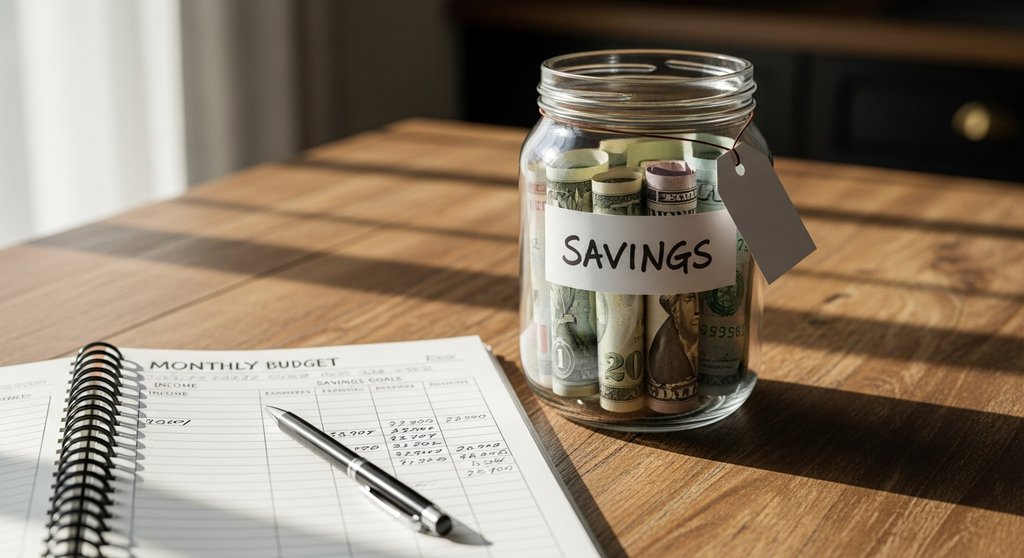
Is 3 Months of Savings Really Enough? The Truth About Emergency Funds
Almost every personal finance guide repeats the same advice: save three to six months of expenses, and you're covered. But that range is so wide it's nearly useless, and for a lot of people, even six months falls dangerously short.
Why the '3 to 6 Month' Rule Misleads More Than It Helps
The three-to-six-month guideline was built for a very specific type of worker: someone with a stable salaried job, employer-sponsored health insurance, and no dependents. If that's not you, the math changes dramatically. A freelance graphic designer with irregular income and a $400 monthly prescription faces a completely different risk profile than a tenured teacher with a union contract.
The rule also ignores the current job market reality. In sectors like tech and media, average job searches now run 4 to 6 months even for experienced candidates. Add the time it takes for a new paycheck to arrive, and a three-month cushion can evaporate before you land a single offer. Using a generic benchmark when your situation is specific is how people end up in credit card debt after one bad quarter.
The Variables That Shift Your Target by Thousands of Dollars
Four factors move the needle more than anything else. First, income stability. A household with two full-time salaries from different industries can justify a smaller fund because the odds of both partners losing income simultaneously are low. A single-income household, or one where both partners work in the same volatile sector, needs a larger buffer. Second, fixed monthly obligations. Rent or mortgage, car payments, and insurance premiums are non-negotiable. Someone carrying $3,200 in fixed monthly costs needs $19,200 just to cover six months of obligations, before groceries or utilities. Try the emergency fund calculator to see your own numbers.
Third, health and dependents. A family with young children or a member managing a chronic condition faces higher-probability, higher-cost disruptions. A single healthy adult in their 30s faces far less variance. Fourth, access to credit. If you have a $20,000 unused line of credit at a reasonable rate, some advisors argue you can shade your cash reserve slightly lower. In a high-interest-rate environment, though, leaning on credit as a backup costs real money fast, so this calculation deserves more scrutiny than it used to.
Running the Numbers With Your Actual Monthly Spending
The fastest way to get a personalized target is to start with your real essential expenses, not your income. Pull three months of bank and credit card statements and total up only what you'd still pay if you lost your job tomorrow: housing, utilities, groceries, insurance, minimum debt payments, and any unavoidable subscriptions. That monthly number, multiplied by your appropriate coverage period, is your true target. An emergency fund calculator that accounts for income type, dependents, and existing debt gives you that coverage period based on your specific inputs rather than a generic rule.
Say your essential monthly spend is $3,800 and you're self-employed with one dependent. A reasonable target might be 9 months, putting your goal at $34,200. That sounds like a lot, but broken into a savings timeline it's manageable. At $500 per month, you reach it in under 6 years; at $850 per month, in under 4. Knowing the exact number makes the goal concrete instead of vague.
Where to Keep the Money Once You Have a Target
A high-yield savings account is still the standard recommendation, and the current rate environment finally makes this worthwhile. Many online banks are offering 4.5% to 5% APY on savings accounts as of mid-2025, which means a $20,000 emergency fund earns roughly $900 to $1,000 per year in interest. That's not an investment strategy, but it does offset inflation meaningfully compared to a checking account sitting at 0.01%.
The key constraint is liquidity. Money market funds and short-term Treasury bills can offer comparable yields, but withdrawing from them takes one to three business days and sometimes involves transaction limits. In a genuine emergency, that friction matters. Keep at least one month of your target in an account you can access same-day, and park the rest wherever the yield is best. Splitting the fund across two accounts sounds complicated, but it's a 10-minute setup that can save you from selling assets or carrying a balance at 24% APR.