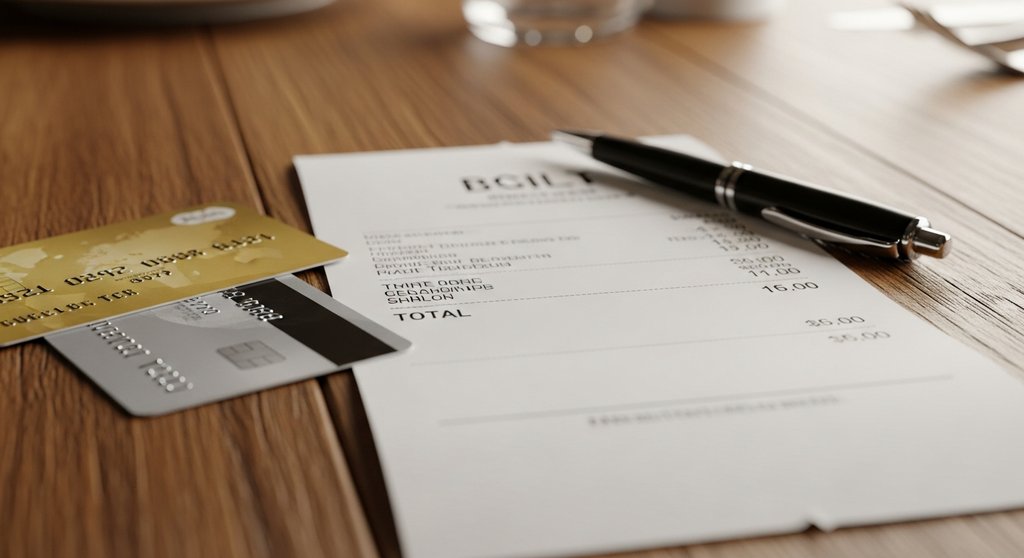
Should You Tip on the Pre-Tax Total? The Math Matters
You've been calculating your restaurant tip on the wrong number, and it's costing you more than you realize.
Why the Post-Tax Habit Is So Widespread
Most people tip on whatever number appears at the bottom of the check. That's the post-tax total, which already includes your state or city sales tax. Depending on where you live, that tax can run anywhere from 0% in Montana or Oregon to over 10% in some Chicago dining zones. You're effectively tipping on a government surcharge, not the actual cost of your meal.
The habit exists because restaurants make it easy. Suggested tip lines on receipts almost always calculate percentages against the post-tax total. It's convenient, and servers aren't going to correct you. But convenience and correctness aren't the same thing.
The Dollar Difference on a $80 Dinner
Say your food and drinks come to $80 before a 9% sales tax. Your post-tax total is $87.20. A 20% tip on that post-tax number is $17.44. The same 20% tip on the $80 pre-tax subtotal is $16.00. That's $1.44 saved on a single meal. Try the tip and bill splitter to see your own numbers.
That gap grows fast. If you dine out twice a week and tip on the post-tax number every time, you're overpaying by roughly $150 a year at that rate. In a city with a 10.5% restaurant tax, like Chicago, the difference per meal jumps even higher. None of this means you should tip less generously; it means you should tip intentionally.
Splitting a bill makes the math even messier. When four people split an $80 check, each person's share is $20. A 20% tip on that share is $4. But if everyone is mentally calculating off a $5.45 post-split post-tax number, the math gets fuzzy fast and the group either overtips or argues.
When Tipping on the Post-Tax Total Actually Makes Sense
There are situations where tipping on the post-tax number is a reasonable choice. If your state has zero or near-zero sales tax, the difference is negligible. If you received exceptional service and want to express that generosity, tipping on the higher number is a simple way to do it.
Some etiquette writers also argue that in cities with very high costs of living, servers depend more heavily on tips to cover rent. San Francisco and New York diners often tip 25% or more on the full check as an acknowledgment of that reality. The pre-tax rule is a guideline, not a moral law.
How to Stop Guessing and Just Get the Number Right
The cleanest solution is to skip the mental arithmetic entirely. A good tip and bill splitter gives you a field for the pre-tax subtotal, lets you set your tip percentage, and handles the per-person math in one step. You enter $80, choose 20%, and see $16. Done.
This matters most when you're with a group. Splitting five ways on a $240 check after drinks, appetizers, and entrees is the kind of situation where someone always ends up underpaying and someone else quietly covers it. Doing the math cleanly before anyone pulls out a card keeps the table friendly.
The next time you sit down at a restaurant, look at the subtotal line before tax, not the total at the bottom. Type that number in, set your percentage, and tip with confidence rather than rounding up to whatever feels right under social pressure.