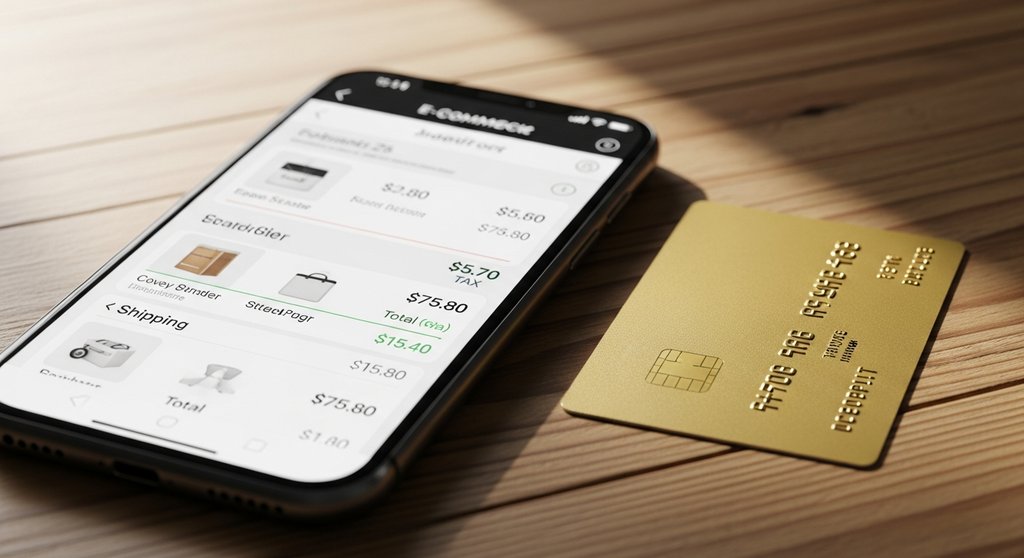
Why Your Online Cart Total Never Matches What You Pay
You add items to your cart, see a subtotal, and then the checkout page hits you with a number 8 to 12 percent higher than expected.
The Gap Between Sticker Price and Final Total
Most shoppers mentally round up by a few dollars when estimating tax. That habit works fine at a drugstore, but it breaks down fast on larger purchases. Buy a $1,200 laptop in a city with a combined state and local rate of 10.25 percent, and the tax alone is $123. That is not rounding territory; that is a real line item in your budget.
The confusion is understandable. Retailers display pre-tax prices because there is no single national rate to bake in. A product sold in Portland, Oregon carries zero sales tax. The same product shipped to Chicago can attract a rate above 10 percent once Cook County and city surcharges stack on top of Illinois's base rate. Neither number is wrong; they are just two very different places on the tax map.
Why Combined Rates Are Almost Always Higher Than the State Rate
When people search for a state's sales tax, they usually find the state base rate. California's is 7.25 percent. But most California shoppers actually pay between 8.5 and 10.75 percent because counties and cities layer their own fractions on top. Los Angeles County adds 2.25 percent. Some special districts tack on another quarter point for transit or public safety. These additions are technically optional for local governments, and they change more often than the state rate does. Try the sales tax calculator to see your own numbers.
This layering is also why two stores in the same metro area can charge different rates. A retailer with a warehouse just inside a city boundary collects the city's rate. One just outside collects only the county rate. On a $500 appliance, that difference can be $10 to $20. Knowing the combined rate for your specific zip code before you buy is the only way to avoid the surprise at checkout.
The Product Exemptions Most Shoppers Overlook
Sales tax is not applied uniformly to every product category. Groceries are fully exempt in 32 states. Prescription drugs are exempt nearly everywhere. Clothing is exempt in several northeastern states, though accessories and athletic gear often are not. If you have been mentally adding tax to your grocery bill in a state like Texas, which exempts most food, you have probably been over-budgeting for years.
Back-to-school tax holidays add another layer. Roughly 16 states hold annual windows, typically in July or August, when clothing, school supplies, or computers under a set price threshold are sold tax-free. The savings on a single family's school shopping run can reach $40 to $80 depending on the state and what you buy. Missing that window because you did not know it existed is a straightforward way to leave money on the table.
How to Know Your Real Cost Before You Click Buy
The practical move is to run the numbers before you commit, especially on anything over $200. A sales tax calculator lets you enter the item price and your local combined rate and get the exact total in seconds. It also works in reverse: if you know the total you paid and want to extract just the tax portion, most tools handle that direction too.
This matters for budgeting, not just curiosity. If you are comparing two retailers and one is slightly cheaper pre-tax but located in a higher-rate jurisdiction, the post-tax price can flip the decision. The same logic applies to large online orders from vendors that collect tax in your state versus smaller merchants that may not yet. Use a sales tax calculator to run the real comparison on your next significant purchase and see where the totals actually land.