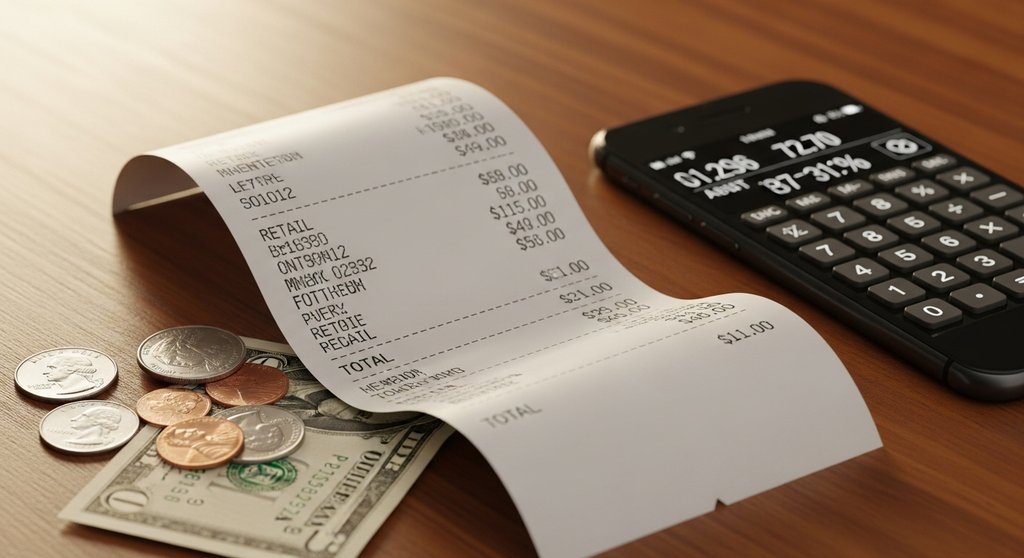
Why Your Receipt Total Never Matches the Price Tag
That $299 laptop rarely costs $299, and the gap between sticker price and register total trips up shoppers every single day.
The layered tax system most shoppers never think about
Sales tax in the United States is not a single federal rate. It is a stack of rates: a state base rate, a county add-on, sometimes a city surcharge, and occasionally a special district levy for things like transit or stadiums. Tennessee charges a 7% state rate, but Shelby County adds another 2.25%, pushing Memphis shoppers to 9.25% before any city fees.
That layering is why two stores separated by a county line can charge meaningfully different totals on the same item. A $1,000 TV bought in a high-tax zip code costs $92.50 in sales tax in Memphis. The same TV bought across the state line in a zero-sales-tax state like Oregon costs nothing extra. That is a real, spendable $92.50 difference.
How exemptions quietly change what you actually owe
Most states exempt groceries, prescription drugs, or both. But the definition of 'grocery' gets complicated fast. In Texas, a bag of potato chips is taxable. A bag of plain popped popcorn sold in bulk is not. Candy containing flour is treated as food and taxed at the lower food rate in some states; candy without flour is taxed at the full rate. Try the sales tax calculator to see your own numbers.
Clothing exemptions add another layer. New York exempts clothing items under $110 per piece, but accessories like handbags and most sports gear are still taxed. If you buy a $95 coat and a $95 backpack in Manhattan, the coat is tax-free and the backpack is not. Knowing these rules before checkout prevents the mild shock of a higher-than-expected bill.
What a 9% combined rate actually adds to a big purchase
On everyday items under $50, sales tax feels invisible. On large purchases, it becomes a genuine budget line. A $25,000 car in a city with a combined 9% rate adds $2,250 at the register. A $3,500 appliance package adds $315. These are numbers worth knowing before you walk into a store, not after you hand over your card.
For online purchases, the picture changed significantly after the 2018 Supreme Court decision in South Dakota v. Wayfair. States can now require out-of-state sellers to collect sales tax even without a physical presence in the state. Most major retailers collect it automatically, but smaller marketplaces sometimes do not, leaving you technically responsible for filing a 'use tax' return. Almost nobody does, but the obligation exists.
Running the math ahead of time is straightforward with a sales tax calculator. Plug in the item price and your local combined rate, and you get the exact tax amount and the final total. It takes about ten seconds and eliminates the checkout surprise entirely.
Finding your actual combined rate without the guesswork
State tax authority websites publish base rates, but combined rates require more digging. The Tax Foundation updates a county-level map annually; searching your city name plus 'sales tax rate' usually surfaces the combined figure. Rates for 2024 range from 0% in Montana, New Hampshire, Oregon, and Delaware to over 11% in parts of Louisiana and Arkansas.
Rates also change. Alabama cities and counties adjust their rates through local ballot measures, so a rate valid last year may already be outdated. If you are budgeting for a major purchase, check the current rate for your specific zip code, not just the state headline number. A one-percentage-point error on a $5,000 purchase is $50 you did not plan for.