What is Compound Interest?
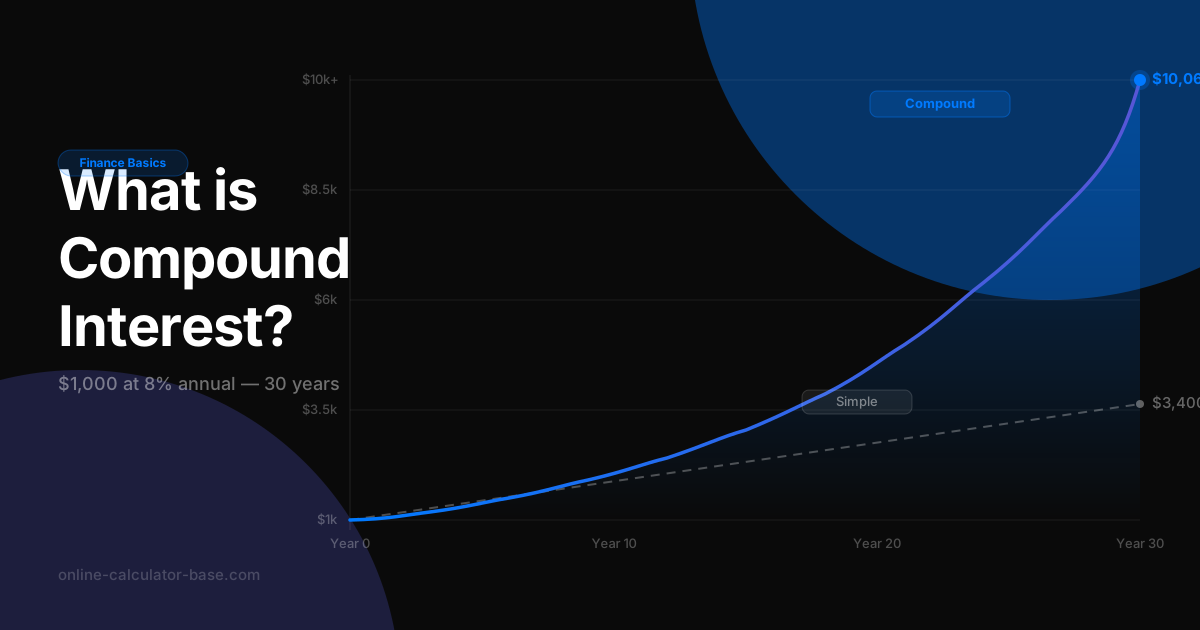
Put $1,000 in a savings account today. With simple interest at 8% per year, you earn $80 every year , no more, no less. After 30 years you have $3,400.
Now do the same with compound interest. In year one you still earn $80. But in year two, you earn 8% on $1,080 , that's $86.40. In year three, 8% on $1,166.40. The interest earns interest. After 30 years, you have $10,063 , nearly three times more.
That gap is compound interest at work. It's not magic; it's math. And once you understand how it works, you can use it deliberately.
The definition
Compound interest is interest calculated on the initial principal plus all previously accumulated interest. In other words: you earn a return on your return.
Simple interest only applies to the original principal. Compound interest keeps reinvesting , and with enough time, the difference becomes dramatic.
- A , final amount (principal + interest)
- P , principal (initial deposit)
- r , annual interest rate (as a decimal, e.g. 0.08 for 8%)
- n , number of times interest compounds per year
- t , time in years
A real example
Say you invest $5,000 at an annual rate of 7%, compounded monthly, for 20 years.
You contributed $5,000. The other $14,869 came entirely from compound growth , no extra deposits required. In the final five years alone, roughly $5,500 of interest was added. That acceleration is the hallmark of compounding.
Compounding frequency matters
The n in the formula is compounding frequency , how often interest is added to your balance. The more frequently it compounds, the more you earn.
For most savings accounts and investments, monthly compounding is standard. The difference between monthly and daily is small , but the difference between annual and monthly over decades can be meaningful.
Why time is the most powerful variable
Rate gets most of the attention. But time is actually the lever that matters most with compound interest. Because the formula is exponential, the growth curve bends upward the longer you leave it.
Same monthly contribution. Same rate. The only difference is 10 years of extra compounding time , worth over $280,000.
The other side: compound interest works against you too
The same mechanics that grow savings can shrink your finances just as powerfully when you carry debt. Credit card APRs of 20-29% compound monthly. A $3,000 balance left untouched for five years can grow to over $8,000 in interest charges alone.
This is why financial advisors often say: "Pay high-interest debt first, then compound in your favor." The math works identically in both directions.
How to put compound interest to work
- 1 Start as early as possible. Even small amounts invested in your 20s can outgrow larger amounts invested in your 30s or 40s.
- 2 Reinvest dividends and interest. Withdrawing returns breaks the compounding chain. Let them accumulate.
- 3 Use tax-advantaged accounts. In a 401(k) or IRA, your gains compound without an annual tax drag , making compounding even more powerful.
- 4 Pay down high-interest debt first. Eliminating 20% interest debt is a guaranteed 20% return , better than most investments.
- 5 Don't interrupt compounding unnecessarily. Selling investments or withdrawing savings resets the clock. Consistency compounds just as much as rate.
The bottom line
Compound interest is straightforward in concept but profound in impact. It rewards patience, consistency, and an early start. Whether you're saving for retirement, a home, or financial independence, understanding compounding is the foundation of every long-term financial plan.
The best way to see it for yourself is to run the numbers with your own figures.
Enter your starting amount, monthly contributions, rate, and time horizon. See your projected balance, total interest earned, and a year-by-year breakdown.
Open calculator →